The Eagle of Justice
Dante’s Divine Comedy: Paradiso XIX
This is an essay and painting that I created in college in 2016 for an independent study in which we read Dante’s Divine Comedy in the original Italian.
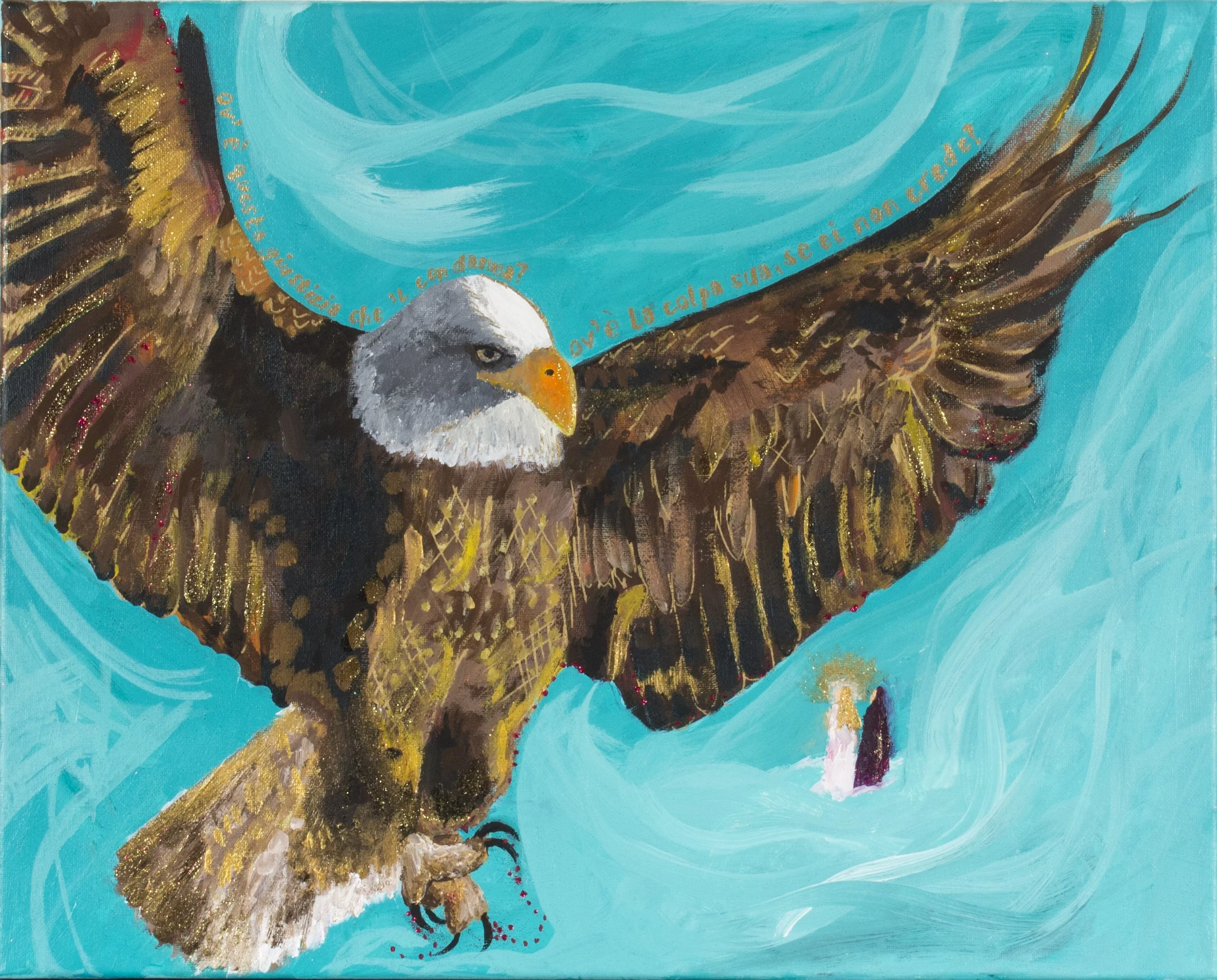
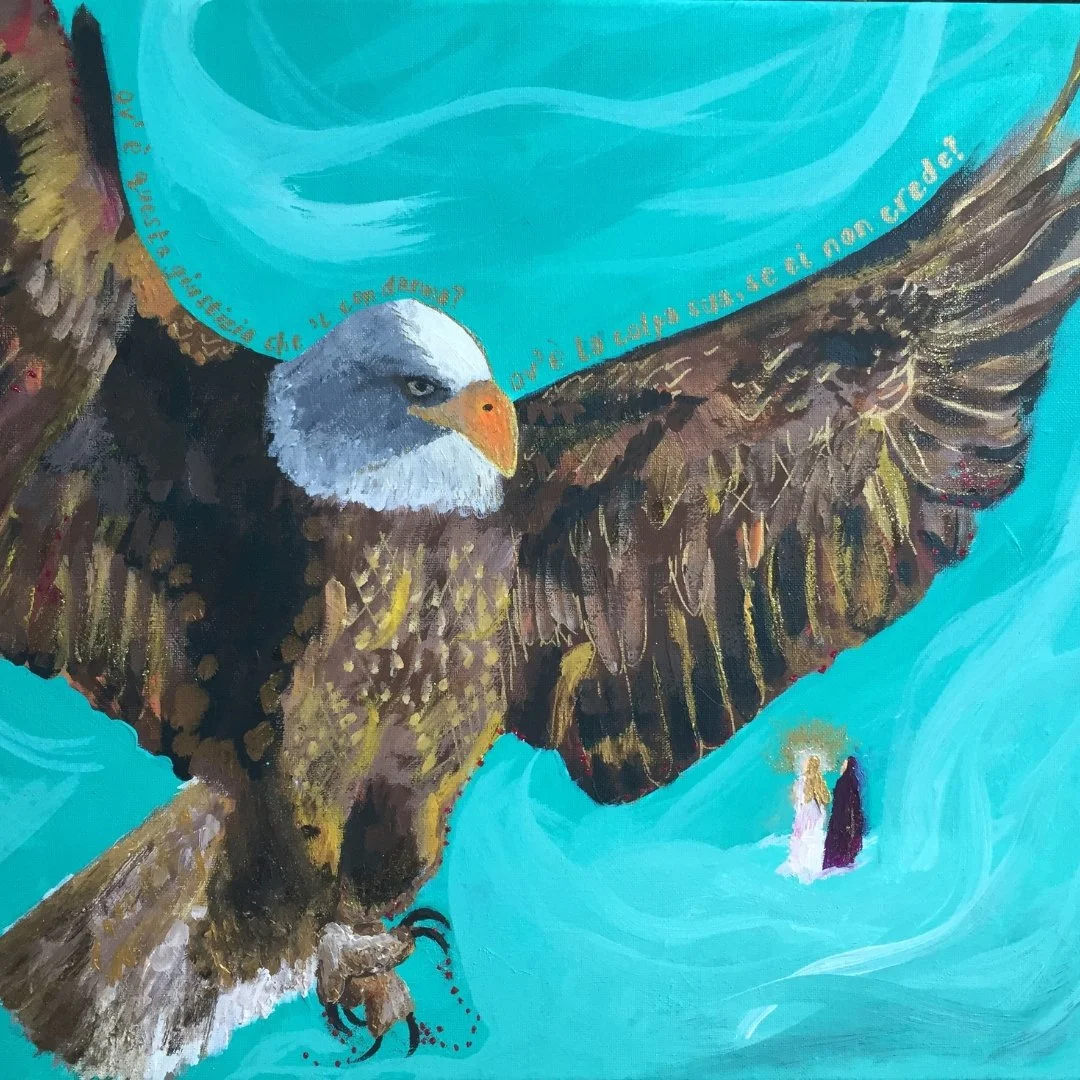
In the nineteenth canto of Dante Aligheri’s Paradiso, souls appear in the shape of an Eagle while in Jupiter, the Heaven of justice. In the first few lines of the canto he describes the souls as interwoven in creating the image of the eagle yet singular in the power of their reflection of the sun. By using language to create a paradox between the singularity and plurality of the souls Dante complicates the image he creates for us.
In my interpretation of the canto I created the full image of the Eagle in brown and shades of gold to reflect the silver and gold coloring of Jupiter (Par.XVIII Ln. 95-96). I used
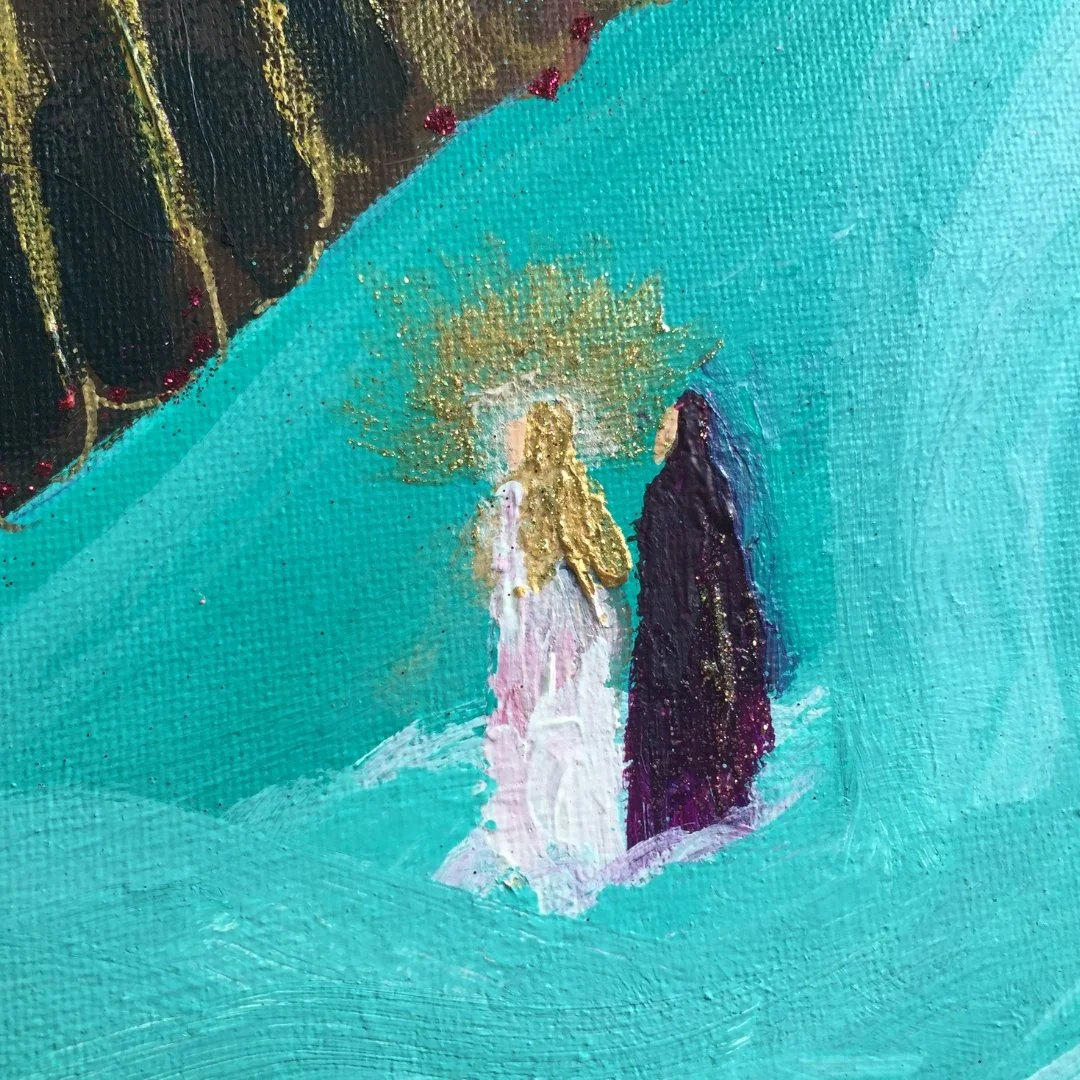
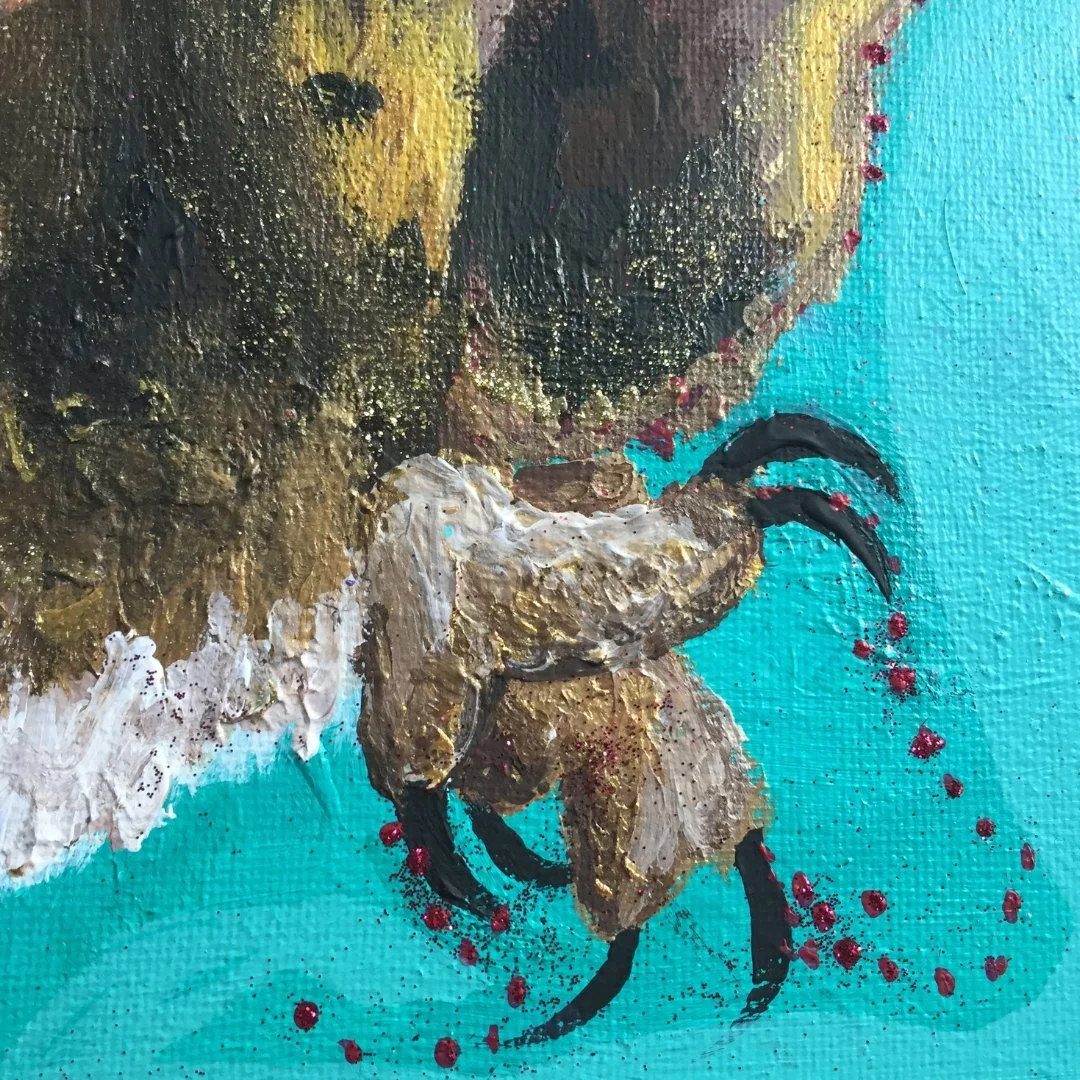
small sparkles to act as “ruby’s” reflecting the sun into Dante’s eyes (Par.XIX Ln. 4-6) and to represent the individual souls involved in creating this image for Beatrice and Dante (Par.XIX Ln. 1-3 and 19-24). By representing the full image and the individuals that make it up my goal was to translate the verbal paradox in visual language.
The background color is light in tone because Dante and Beatrice are approaching God, the source of all light. At line 64, the Eagle describes God as an ever shining clear sky. I chose to paint the sky blue to place God around them like an invisible fourth character and to re-frame the piece on God (just as, Dante would argue, all art should be). Because of the spiraling nature of all three canticles I tried to create a visual effect of motion to indicate Dante and Beatrice’s path. It is not explicitly indicated that Dante and Beatrice are moving in this scene, but regardless the pattern in the sky indicates that if they aren’t now, they will be shortly.
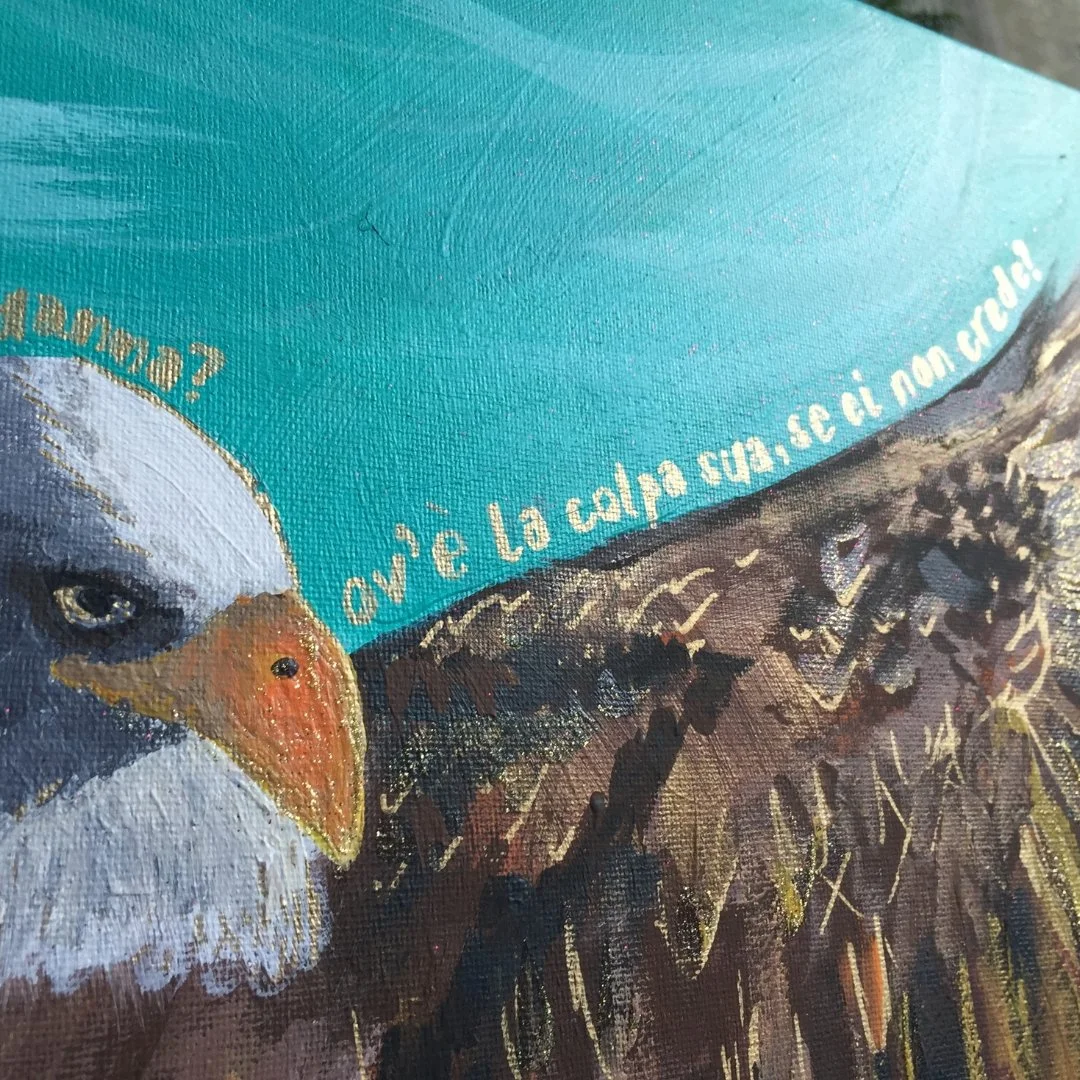
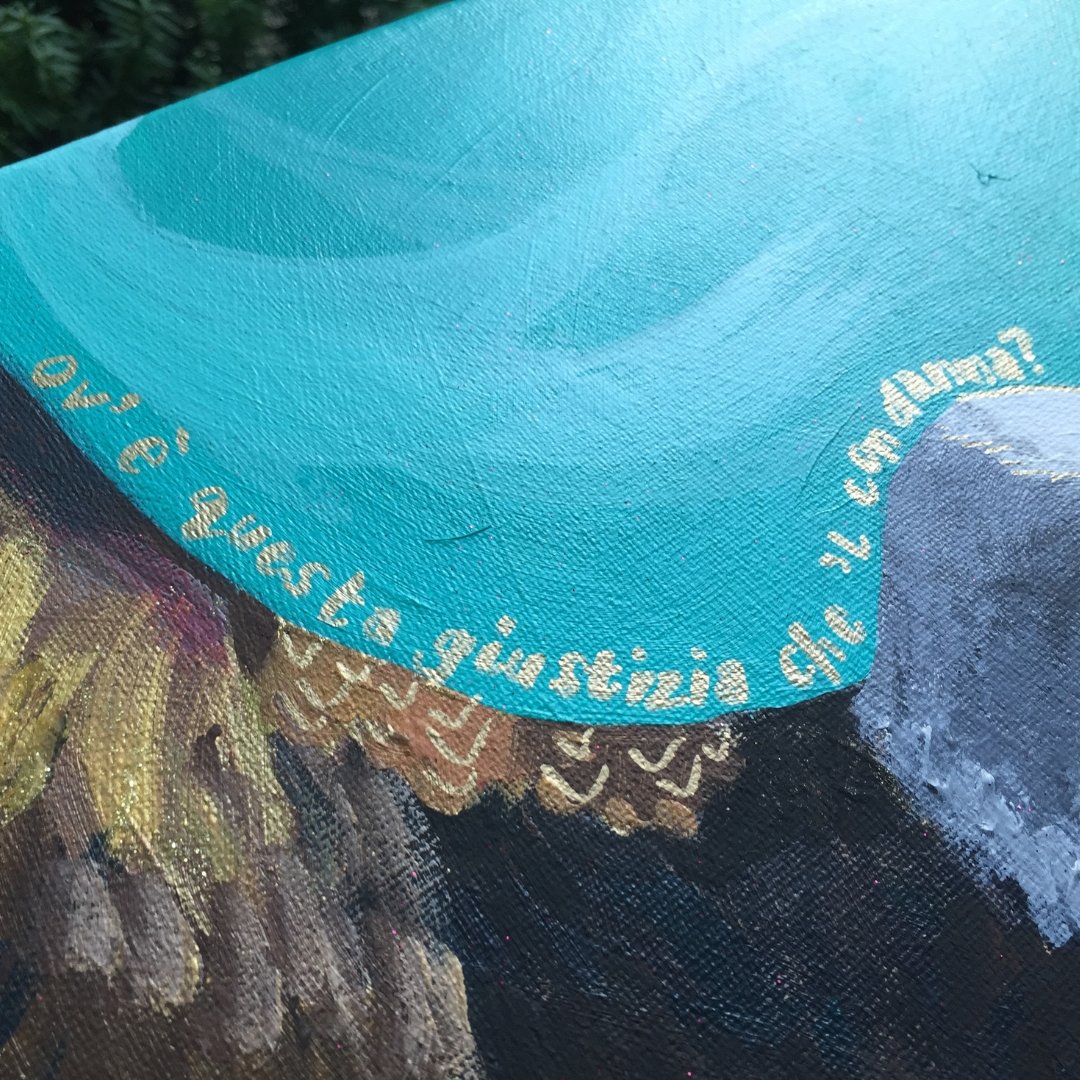
Over the span of the Eagle’s wings is a quote from lines 77-78, “Ov’ e` questa guistizia che ‘l condanna? Ov’ e` la colpa us, se ei non crede?” meaning ‘Wherein lies the justice that condemns him? Wherein lies his fault if he does not believe?’ This is an essential question for Dante poet and pilgrim (and religious audiences) as it questions the justice of God in everything he does. The Eagle’s responds that God is only ever good and His eternal judgement exceeds all human understanding.